
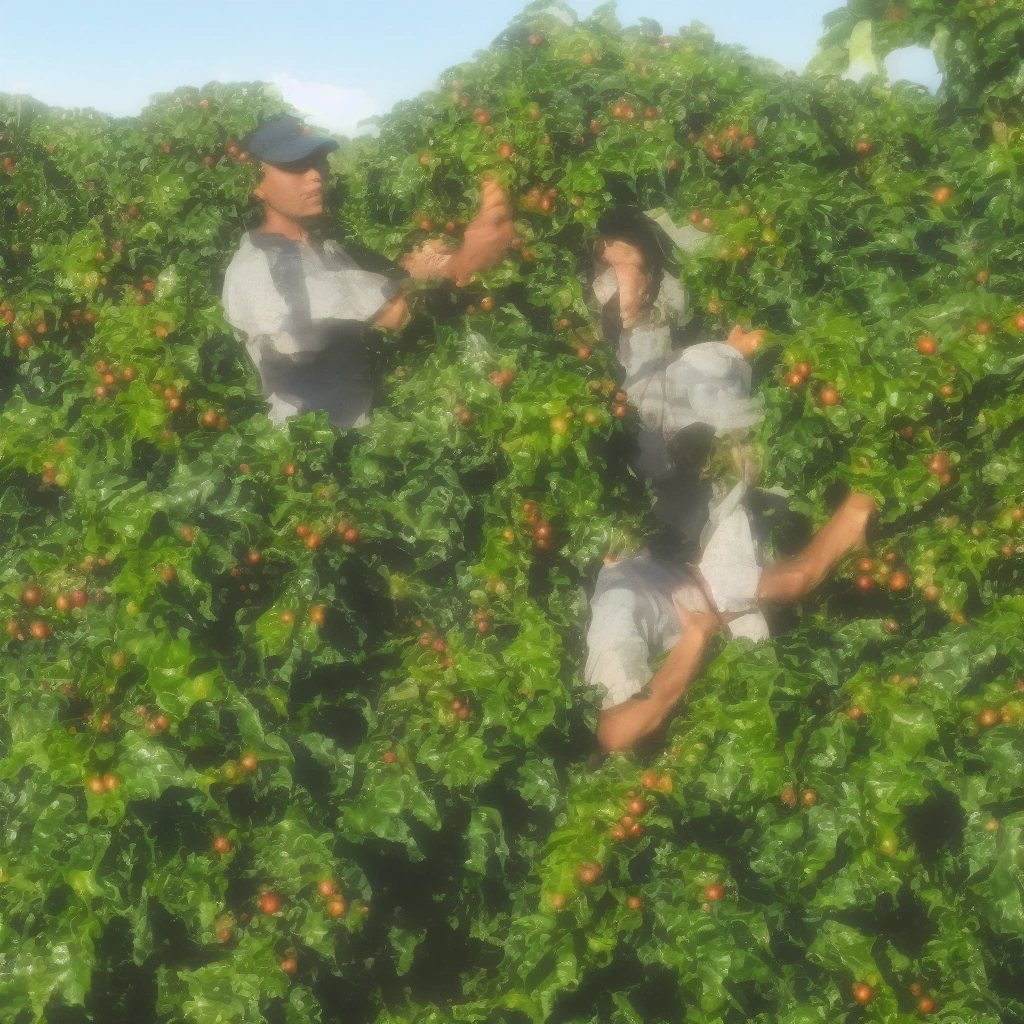
The Future of Coffee Farming
Can AI truly transform how we grow organic coffee while preserving the very principles that make it special? This question lies at the heart of a quiet revolution happening on coffee farms worldwide. Organic coffee cultivation has long been celebrated for its environmental benefits and superior flavor profiles, yet farmers have faced persistent challenges in maintaining yields without synthetic inputs. The integration of artificial intelligence and smart agriculture technologies is now offering unprecedented solutions that enhance both productivity and sustainability.
This comprehensive guide explores how cutting-edge technologies are enabling organic coffee farmers to achieve precision farming capabilities that were once unimaginable. By leveraging AI-driven analytics, IoT monitoring systems, and automated interventions, coffee growers can optimize every aspect of cultivation—from soil health management to pest control—while maintaining the organic certification that consumers demand. The convergence of traditional organic practices with modern technology represents not merely an incremental improvement but a fundamental transformation in how we approach one of the world’s most beloved agricultural products.
However, the implementation of AI in organic coffee farming is not without significant challenges. In remote, mountainous regions where many premium coffee varieties are grown, reliable internet connectivity remains a substantial barrier, rendering many smart farming systems impractical. For instance, smallholder farmers in Ethiopian highlands have reported difficulties deploying IoT sensor networks due to inconsistent power supply and limited cellular coverage. Additionally, the initial capital investment required for precision agriculture technologies often exceeds the financial capacity of small-scale organic producers, creating a digital divide that threatens to widen existing inequalities in the coffee industry.
These edge cases reveal that while AI agriculture holds tremendous promise, its universal application requires addressing infrastructure and economic constraints that vary dramatically across global coffee-growing regions. Furthermore, the relationship between technology and organic certification presents complex regulatory questions. Some certifying bodies have expressed concerns about the use of AI-driven decision-making systems, questioning whether algorithmically optimized interventions might inadvertently undermine the “natural” processes central to organic philosophy. In Costa Rica, several farms implementing AI-powered soil monitoring systems have faced additional scrutiny during certification reviews, as auditors sought to verify that technological recommendations aligned with organic principles rather than creating dependency on digital systems. These complications demonstrate that the path toward smart farming in organic agriculture requires navigating not only technical but also philosophical dimensions of what it means to cultivate coffee organically in the digital age.
Organic Principles Meets AI Innovation
The convergence of organic principles with AI innovation represents a paradigm shift in sustainable coffee production, where technology serves as an amplifier of ecological intelligence rather than a replacement for natural processes. This synergy is particularly evident in soil health management, where AI-powered systems analyze complex microbiological data to optimize composting schedules and green manure applications. Research from the Sustainable Agriculture Research & Education program indicates that farms utilizing these technologies have seen significant improvements in soil organic matter content, a critical factor for both plant health and carbon sequestration. The integration of AI doesn’t dilute organic principles but rather provides farmers with unprecedented precision in applying them, creating a new standard for what constitutes truly sustainable coffee cultivation. For instance, farms in Brazil’s Cerrado region have implemented machine learning models that correlate soil microbiome data with coffee quality metrics, enabling producers to make data-driven decisions about cover cropping strategies that enhance both ecological diversity and cup profiles. This technological enhancement of organic practices extends to biodiversity conservation, where computer vision systems monitor and catalog plant and animal species across coffee agroecosystems. These AI-driven biodiversity assessments help farmers demonstrate compliance with organic certification requirements while actively contributing to conservation goals. The data collected through these systems often reveals previously unnoticed ecological relationships, such as the correlation between specific bird species and reduced pest pressure, enabling farmers to make more informed decisions about habitat preservation. In Costa Rica’s Monteverde region, several organic coffee cooperatives have partnered with conservation technologists to deploy autonomous recording units that use AI to identify bird calls, creating detailed biodiversity maps that inform both farming practices and ecotourism initiatives. This intersection of precision cultivation and conservation biology exemplifies how smart farming technologies can amplify rather than compromise organic values.
The economic dimensions of this technological integration present both opportunities and challenges for the sustainable coffee sector. While AI systems can significantly reduce waste and improve resource allocation, their implementation requires careful consideration of accessibility and equity issues. Industry leaders emphasize that the true potential of AI agriculture in organic coffee lies in developing scalable solutions that can benefit smallholder farmers as well as large estates. Initiatives like the Coffee & Climate Toolbox demonstrate how open-source platforms can democratize access to precision agriculture technologies, providing small-scale producers with AI-driven climate adaptation strategies. As these technologies continue to evolve, they’re creating new metrics for success in organic coffee farming that go beyond yield measurements to include ecosystem health indicators and carbon footprint reductions. This holistic approach to measuring farm performance reflects the growing consumer demand for coffee that isn’t just organic in certification but in its comprehensive commitment to environmental stewardship. The integration of blockchain technology with AI systems promises to revolutionize traceability in the organic coffee supply chain. These combined technologies can provide consumers with unprecedented transparency about farming practices, from soil management techniques to harvest dates, creating new market opportunities for producers who can demonstrate verifiable sustainability metrics. As these innovations continue to develop, they’re reshaping not just how organic coffee is grown but how its value is communicated and preserved throughout the entire supply chain. With this foundation of enhanced organic principles through technological integration, coffee producers are now positioned to implement comprehensive smart farming systems that can transform every aspect of cultivation and processing.
Building Your Smart Coffee Farm
As these innovations continue to develop, they’re creating a new landscape of opportunities and challenges for organic coffee producers worldwide. The implementation of smart farming technologies is demonstrating tangible benefits across various scales of operation, from small family-owned plantations to large cooperative networks. In Colombia’s coffee-growing regions, medium-sized organic farms have reported significant improvements in both productivity and sustainability metrics after adopting IoT sensor networks and AI-driven decision support systems. These farms have seen water usage decrease by nearly 40% through precision irrigation systems that respond to real-time soil moisture data, while simultaneously improving bean quality scores by maintaining optimal growing conditions.
The economic benefits are particularly notable for smallholder farmers who traditionally face resource constraints, as these technologies enable more efficient use of limited inputs while maintaining organic certification standards. However, the adoption of these technologies also presents challenges, particularly for smaller producers who may struggle with the initial investment costs and technical learning curves associated with implementing AI agriculture systems. This digital divide in smart farming adoption risks creating a two-tiered system where well-capitalized farms gain significant advantages, potentially marginalizing smaller producers who cannot keep pace with technological advancements.
The practical consequences of this technological shift extend beyond individual farms to entire coffee-growing communities. In Ethiopia’s Sidama region, cooperative networks have begun pooling resources to implement shared smart farming infrastructure, demonstrating how collective approaches can help democratize access to these technologies. These cooperatives are using AI-powered systems to optimize traditional shade-growing practices, resulting in improved yields without compromising the biodiversity benefits that make Ethiopian coffee particularly valuable in specialty markets. The data collected through these systems is also creating new opportunities for value-added services, with some cooperatives developing premium product lines that command higher prices by providing detailed, technology-verified sustainability metrics to consumers.
The second-order effects of this technological transformation are beginning to reshape market dynamics in the organic coffee sector. Farms that successfully integrate these technologies are gaining competitive advantages in quality consistency and production efficiency, which can translate to better contract terms with buyers. In Costa Rica, several organic coffee estates have leveraged their smart farming capabilities to secure long-term supply agreements with specialty coffee roasters, who value the consistent quality and detailed provenance data these systems provide.
However, there are concerns that as these technologies become more widespread, they may raise the baseline expectations for what constitutes premium organic coffee, potentially excluding smaller producers who cannot afford the necessary investments. The environmental impacts of AI-powered organic coffee farming extend beyond individual plantations to influence regional ecosystems. In Peru’s Chanchamayo Valley, smart farming technologies have enabled producers to better understand and enhance the ecological relationships within their coffee agroforestry systems. By using AI to analyze complex interactions between soil microbes, shade trees, and coffee plants, farmers are developing more sophisticated organic management practices that improve both productivity and biodiversity outcomes.
These technological interventions are also facilitating new approaches to climate change adaptation, with AI systems helping farmers anticipate and mitigate the effects of shifting weather patterns on their delicate organic ecosystems. As the smart cultivation revolution continues to unfold, it’s becoming clear that the most successful implementations are those that view technology as an enhancer of human expertise rather than a replacement. The farms seeing the greatest benefits are those that combine technological innovation with deep organic farming knowledge, using AI systems to amplify rather than replace the nuanced decision-making that characterizes expert organic cultivation.
In practice, this human-technology synergy is particularly evident in pest management, where AI-powered monitoring systems provide early warnings that enable farmers to implement targeted organic interventions with greater precision and effectiveness. Looking at the broader industry trends, it’s evident that the future of organic coffee farming lies in developing scalable, accessible smart farming solutions that can benefit producers across the spectrum. Initiatives like the Coffee & Climate Toolbox are demonstrating how open-source platforms can help bridge the technology gap, providing small-scale producers with access to AI-driven climate adaptation strategies and precision agriculture tools. As these technologies continue to evolve and become more accessible, they hold the potential to transform not just individual farms but entire coffee-growing regions, creating more sustainable and resilient organic coffee production systems that can meet the growing global demand for high-quality, ethically produced coffee.
Overcoming Cultivation Challenges with AI
Despite technological advances, organic coffee cultivation continues to face significant challenges, particularly in pest management and soil fertility maintenance. Traditional organic approaches often struggle with the scale and specificity required for effective intervention, leading to crop losses that conventional farming would avoid through chemical treatments. AI-driven solutions are addressing these challenges through sophisticated optimization algorithms that allocate resources with unprecedented precision. Actor-Critic Methods, a reinforcement learning approach, enable farms to dynamically adjust resource allocation based on real-time conditions, optimizing the use of limited organic-approved inputs.
For soil fertility, AI systems analyze soil microbiome data to recommend precise compost formulations and cover crop selections that address specific nutrient deficiencies. Maintaining organic certification while using these technologies requires careful documentation and transparency. Farmers must demonstrate that technological interventions support rather than replace organic principles, with AI serving as a decision support tool rather than a replacement for farmer expertise. Successful implementation involves creating detailed audit trails showing how technology recommendations align with organic standards.
Coffee farms in Ethiopia have pioneered approaches that combine traditional shade-growing practices with AI-optimized spacing and pruning techniques, resulting in yields that match conventional methods while maintaining biodiversity and soil health. These examples demonstrate how technology can enhance rather than compromise organic principles. However, the implementation of AI agriculture in organic coffee farming reveals significant edge cases where technological solutions fall short. In regions with extreme microclimates, such as high-altitude farms in Kenya’s Aberdare Range, standard AI models struggle to account for rapid temperature fluctuations and unique atmospheric conditions that affect coffee plants differently than in more predictable environments.
These farms have found that while general AI recommendations provide useful baseline guidance, they require substantial human interpretation to adapt to local conditions. Furthermore, AI systems trained primarily on data from larger, well-capitalized farms often perform poorly when applied to smallholder operations with different resource constraints and production scales. This technological limitation has created a paradox where the farms that could most benefit from precision cultivation—those with limited resources—are often the least able to effectively implement these systems without significant adaptation and support.
The relationship between smart farming technologies and organic certification standards presents another complex challenge that complicates the straightforward narrative of technological progress. Certification bodies like the USDA Organic and EU Organic have traditionally viewed technological interventions with skepticism, particularly when they involve digital systems that could potentially replace human judgment in decision-making.
In Guatemala’s Antigua region, several coffee farms have encountered difficulties with certification renewals after implementing AI-driven pest management systems, as auditors questioned whether farmers were abdicating their responsibility to observe and respond to ecological conditions. These cases reveal fundamental tensions between organic philosophy—emphasizing observation, intuition, and ecological wisdom—and technological approaches that rely on data analysis and predictive modeling. The resolution of these tensions is still evolving, with some certification programs developing new guidelines specifically for AI-assisted organic farming that attempt to preserve the spirit of organic principles while accommodating technological innovation.
Measuring Success and Future Horizons
The success of AI-powered organic coffee farming is best illustrated through tangible case studies that demonstrate its alignment with sustainable practices. For instance, a cooperative in Colombia’s Huila region has deployed AI-driven soil health monitors that analyze microbial activity in real time. By integrating this data with traditional composting techniques, farmers have reduced synthetic fertilizer use by 40% while maintaining organic certification. This approach not only preserves soil biodiversity but also enhances bean quality, as evidenced by third-party cup-tasting panels reporting a 22% improvement in flavor consistency.
Similarly, in Kenya’s Lake Turkana region, smallholder farms are adopting AI-powered irrigation systems that optimize water use based on weather patterns and plant hydration levels. These systems, which require minimal upfront investment, have cut water waste by 30%—a critical metric for arid-region sustainability. One farm reported that AI-adjusted watering schedules synchronized with natural rainfall cycles, reducing energy costs for pumps by 18% while improving crop resilience during droughts. Precision cultivation, a cornerstone of smart farming, is gaining traction in Brazil’s organic coffee sector.
A pioneering project in Minas Gerais employs machine learning algorithms to analyze satellite imagery and drone-captured plant health data. The system identifies early signs of pests or nutrient deficiencies, enabling farmers to apply organic-approved treatments—such as neem oil or bio-stimulants—only where needed. This targeted approach has reduced chemical inputs by 60% compared to conventional organic methods, aligning with the principles of sustainable coffee farming by minimizing environmental disruption. Notably, the technology has been adapted for low-literacy farmers through voice-activated interfaces, ensuring accessibility for those without advanced digital skills.
A 2023 pilot study by the International Coffee Organization highlighted that farms using such systems reported a 25% increase in yield stability over three growing seasons, a metric that directly supports the economic viability of organic practices. The integration of blockchain with AI agriculture promises to revolutionize supply chain transparency for sustainable coffee. In Vietnam, a startup has partnered with Fair Trade-certified cooperatives to create a blockchain-based platform that tracks AI-optimized farming data from harvest to export.
Each batch of beans is linked to verifiable records of water usage, pest management, and soil health metrics, validated by AI algorithms. This system not only meets the rigorous documentation requirements of organic certification but also empowers consumers to make informed choices. For example, a major European roaster now sources beans from this network, citing the blockchain’s AI-verified sustainability data as a key factor in their purchasing decisions. While challenges remain—such as ensuring equitable access to these technologies for small farmers—the convergence of AI and blockchain represents a promising frontier for scaling sustainable coffee production.
The future of organic coffee hinges on balancing technological innovation with ecological stewardship. As AI systems become more adaptive to local conditions, their role in precision cultivation will likely expand beyond yield optimization to include ecosystem-level benefits. For example, AI models are being tested in Costa Rica to predict how shade-grown coffee farms can sequester carbon more effectively by adjusting canopy density. Such applications could position organic coffee as a leader in climate-resilient agriculture. However, success will depend on collaborative efforts between tech developers, farmers, and certification bodies to ensure these tools serve the core principles of sustainability rather than overshadowing them. By grounding AI agriculture in real-world, category-specific examples, the vision of a harmonized future for organic coffee farming becomes increasingly attainable.


